

The Energy Challenge in Autonomous Systems (UAT Student Insight)
As a Software Engineering student at University of Advancing Technology (UAT), I’ve learned that autonomous delivery isn't limited by navigation algorithms or flight controllers—the real bottleneck is energy. My drone work, built with open-source autopilots and custom ESC setups, exposed the same issues seen in larger autonomous systems: power stability, thermal performance, and limited energy density.
Why Current Drone Power is Limited
To move beyond these constraints, next-generation drone systems must support both high power density and high energy density. Two emerging technologies are central to future research: supercapacitors and all-polymer batteries.
What are Supercapacitors?
Supercapacitors are high-power energy storage devices that provide the short, high-intensity bursts of current required for critical dynamic maneuvers, including:
-
Takeoff and rapid throttle response
-
Obstacle-avoidance thrust corrections
-
Stabilization during wind disturbances
-
Rapid braking or sudden altitude changes
By delivering these high-burst energy demands, supercapacitors reduce instantaneous load on the primary battery pack, smoothing voltage dips and improving overall output stability. Their downside, however, is their inherently low energy storage capacity, which limits use to short-duration tasks rather than full-flight power
All-Polymer Energy Systems
All-polymer (solid-state polymer) batteries have emerged as a promising alternative to traditional LiPo cells. Their projected advantages include:
-
Higher overall energy density
-
Improved thermal resistance and safety characteristics
-
Longer cycle life under repeated discharge
-
Safer, non-liquid electrolyte design
-
Flexible form factors ideal for aerospace platforms
These attributes position all-polymer batteries as a strong candidate for powering future autonomous delivery aircraft and large-scale Urban Air Mobility (UAM) systems, particularly where energy density and thermal safety become mission-critical.
The Hybrid Power System Solution: Supercapacitors + Polymer Batteries
A combined system—supercapacitors for power bursts + all-polymer cells for sustained energy—offers the most viable pathway for improvement.
Key engineering benefits:
- Reduced voltage fluctuation
- More predictable discharge characteristics
- Improved mission endurance
- Increased system safety through thermal stability
Advanced Engineering Disciplines Driven by Power Innovation
These hybrid approaches will be increasingly important as students move into advanced robotics, AI flight control, and aerospace-focused disciplines such as:
How Will Urban Air Mobility (UAM) Be Relevant in the Future?
Urban Air Mobility (UAM) platforms—including eVTOL vehicles—require far more robust energy systems than small drones. Modern UAM designs must achieve:
-
Energy density above 400 Wh/kg
-
Redundant and fault-tolerant power rails
-
Stable thermal performance during high-demand thrust cycles
-
Rapid-charging or modular battery-swap capability
The same bottlenecks we face when building small autonomous drones directly scale into UAM engineering. Student-level experimentation provides an early, hands-on understanding of these aerospace challenges, making drone research an ideal entry point for future engineers.
Why Hands-On UAV Innovation Matters for Future Engineers
Hands-on UAV development reveals the real-world relationships between:
-
Battery chemistry and discharge behavior
-
ESC load response and efficiency
-
Flight-controller tuning under changing conditions
-
Thermal effects on payload capacity and mission duration
These insights shape how students approach emerging aerospace fields and complex engineering problems. As power systems evolve, students can contribute to research, prototyping, and applied innovation through UAT’s project-driven learning environment.
Next Steps To Pursue UAV/UAM Research at UAT
If you're interested in pursuing developing autonomous systems or researching next-generation power technologies, you can begin exploring these fields right away alongside me and other peers at UAT.
Start your journey with UAT today:
> Apply Now
> Request Info
UAT provides the environment, mentorship, and technical resources needed to transform engineering curiosity into real, applied innovation.
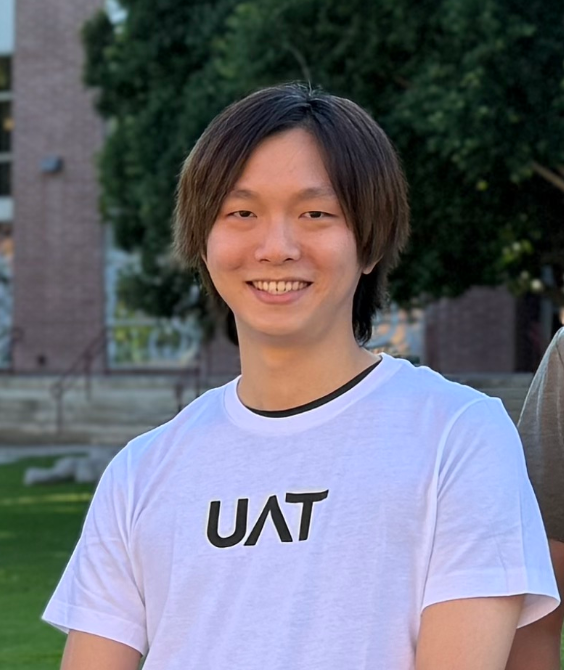
About the Author: Mason, UAT Software Engineering Student
.jpeg?width=768&height=576&name=1125_UAT39%20(1).jpeg)
Mason Wang (white shirt, second from the right) pictured with student peers on UAT's campus in Tempe, AZ.
Hi, I’m Mason — a Software Engineering student at the University of Advancing Technology (UAT) with a growing passion for autonomous systems, robotics, and emerging aerospace technologies.
Working on UAV and power-system research has pushed me to develop not only technical skill, but real engineering discipline: troubleshooting flight-controller behavior, analyzing battery chemistry, refining code for efficiency, and learning how small design decisions change real-world performance. What I appreciate most about UAT is the environment. mentors who genuinely care, classmates who challenge and inspire me, and a campus culture where innovation isn’t just encouraged, it’s expected.
Through hands-on projects, Student Innovation Projects, and guidance from industry experienced faculty, I’ve learned how to turn ideas into functioning prototypes and how to approach engineering problems with intention. My journey is just beginning, but UAT has already given me the tools, support, and mindset to build technology that actually matters. And I’m excited for what comes next.
-1.jpg?width=768&height=512&name=1125_UAT260%20(1)-1.jpg)
Frequently Asked Questions (FAQ)
Q: What is the main bottleneck limiting autonomous delivery drone performance? A: The primary bottleneck is energy, specifically issues related to power stability, thermal performance, and limited energy density in current battery technology.
Q: How do supercapacitors improve autonomous drone flight? A: Supercapacitors provide the short, high-intensity bursts of current needed for critical dynamic maneuvers (like takeoff, obstacle avoidance, and rapid braking), which stabilizes voltage and reduces stress on the main battery pack.
Q: What advantages do all-polymer batteries offer over traditional LiPo cells for UAM? A: All-polymer (solid-state polymer) batteries offer projected advantages, including higher overall energy density, improved thermal resistance and safety, a longer cycle life, and safer, non-liquid electrolytes.
Q: What is a hybrid power system in the context of drones and UAM? A: A hybrid power system combines supercapacitors for high-intensity power bursts with all-polymer cells for sustained energy. This approach reduces voltage fluctuation, improves discharge predictability, and increases system safety.
Q: What UAT degree programs relate to autonomous systems and aerospace power innovation? A: Students explore these fields through programs such as Robotics Engineering, Artificial Intelligence, Advancing Computer Science, and Software Engineering at the University of Advancing Technology (UAT).



/UAT-Logo-new.jpg?width=151&name=UAT-Logo-new.jpg "UAT-Logo-new")
Comment